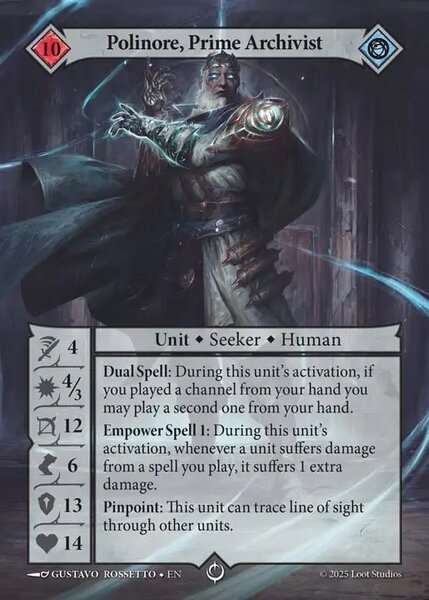
Polinore has quietly become one of the safest picks in Malediction. He sits at 12.8% of the meta right now and has held that meta share for many months. His win rate has climbed to 56.8% at tournaments and 86% win rate among the top players in the world.
His whole plan is to get ahead early, dictate where and when contact happens, and never let his fragile, spell-heavy warband get caught standing in a straight brawl. This is a look at how that plan actually works and what are some upgrades to include to take this to the next level.
Polinore's range of 12 is tied for longest in the game, giving him a great standoff distance. His health however, is among the lowest of the Seekers, which tells you he will be using that great standoff distance most of the time.
His kit is built to turn spells into more spells. Dual Spell lets him play a second Channel spell from hand during the same activation. Empower Spell adds bonus damage whenever a damaging spell is cast on an enemy during his turn. Pinpoint lets him trace line of sight through his own units, so he can sit safely behind a wall of allies and still land shots. None of these abilities are flashy individually. Stacked together, they turn a single activation into a small combo engine.
Dual Spell is the foundation everything else is built on. Getting two Channel spells out of one activation effectively doubles Polinore's action economy for the turn, and it's the reason his deck can afford to run so many cheap spells, since a card that looks unremarkable on its own becomes excellent when you're reliably getting two of them per turn.
Empower Spell rewards exactly that density. Every damaging spell cast during his activation picks up bonus damage, which means the value of Dual Spell compounds rather than just adds; two spells aren't just twice the damage, they're twice the damage plus two Empower triggers.
Pinpoint solves the defensive problem that a squishy ranged Seeker would otherwise have. Because he can trace sight through his own units, Polinore never has to expose himself to get a clean shot; he can park behind the front line and still threaten his full 12-inch range.

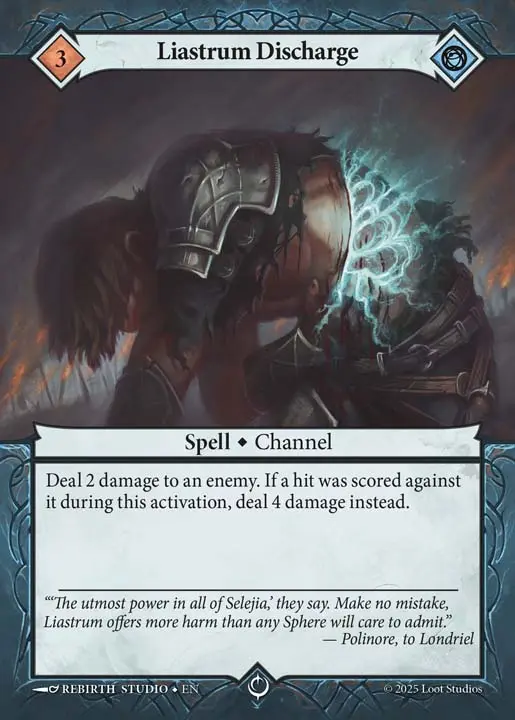
His Legacy, is where the engine really opens up. Runefold Acquisition lets him replay a Basic or Elite spell out of his discard pile for one extra echo, banishing it after it resolves. Molech's Augury then rewards that replay: after a discard-pile spell resolves, he reveals the top card of his deck and draws it if it's a spell, or chooses whether to bin it or leave it on top if it isn't. Together, this roughly doubles the value of every cheap spell in the deck and works as a filtering tool on top of that.
What Polinore does well comes directly from stacking his abilities: a single activation can chain two spells, each one buffed, off a body that's protected by his own front line. That combination of range, tempo, and spell density is hard to match, and the Legacy turns his early-game spell dump into a resource that keeps paying off for the rest of the game.
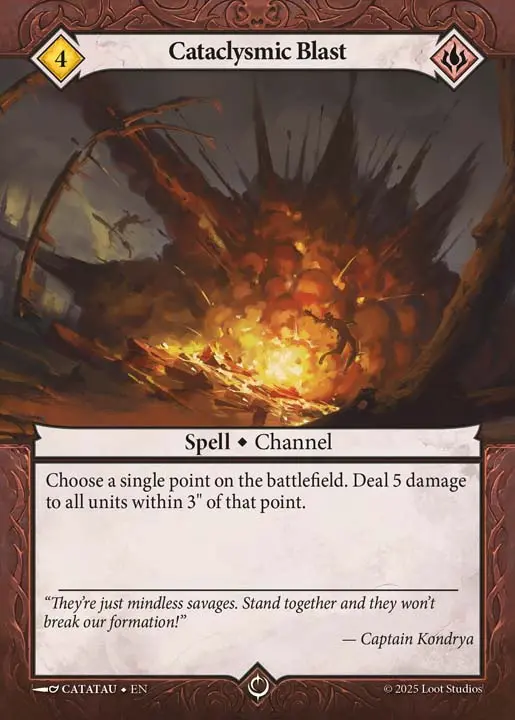
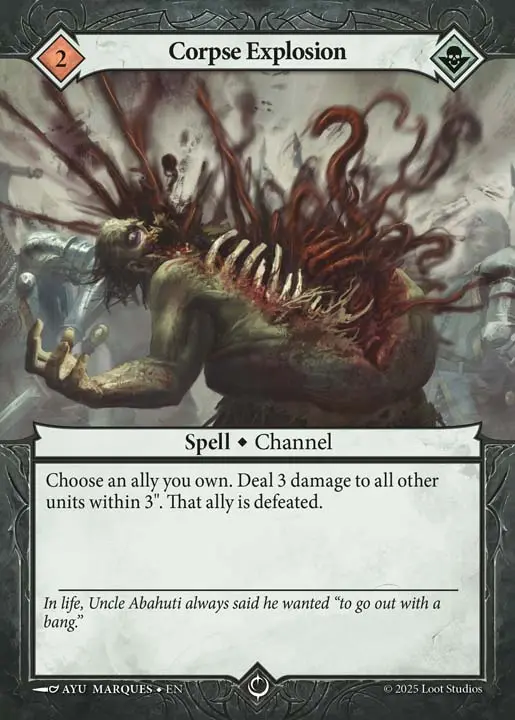
Where he falls short is just as direct. Fourteen health is low by Seeker standards, and the deck has essentially no access to healing, which means it can't out-sustain opponents, so every game is on a clock whether Polinore wants it to be or not. The deck also tends to cluster its units to keep Protection effects online, which makes it a strong target for area damage. Anything that punishes standing still or standing close together (area-of-effect spells, push-and-pull effects) cuts against the deck's core structure rather than around it.
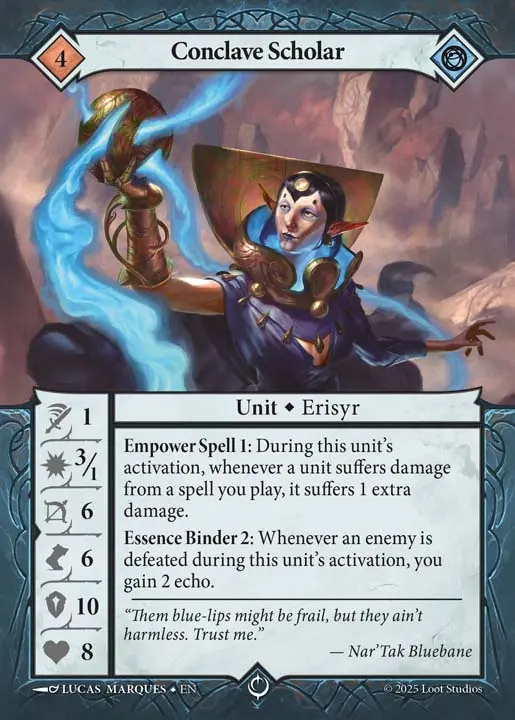
Where most of the other mono-faction Seekers are content to come down on round two or three, Polinore is most often deployed on round one. Getting his spell engine running as early as possible is usually worth more than the extra survivability of waiting. That's a default, not a rule: a strong opening hand full of Conclave Scholars, which share his Empower Spell effect, is reason enough to hold him back.
Having Polinore go first each round allows you to start playing two spells on his activation, filling your graveyard with spells other units can use later from the graveyard for more value.
Early game is about setting the tempo: cheap spells, positioning behind the front line, and starting to exercise the Legacy's value.
Mid-game is where the engine compounds, as replaying spells from the discard pile turns early plays into extra cards and extra damage.
Late game is the deck's most dangerous stretch, since the low health and lack of sustainability mean the clock Polinore has been pressuring the opponent with is now working against him too.
When this deck wins, it tends to win decisively and early; when it loses, it tends to lose before the engine ever got moving.
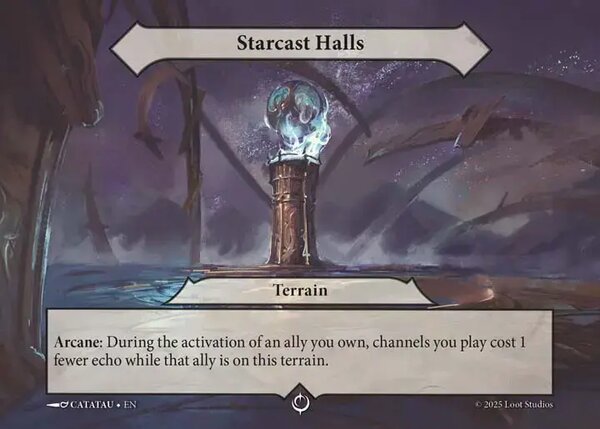
Terrain matters enormously for this deck. Starcast Halls, which discounts spell costs for units standing on it is critical. That discount is what allows Polinore to continue to cast spells into the late game stretching his limited echo as far as possible.
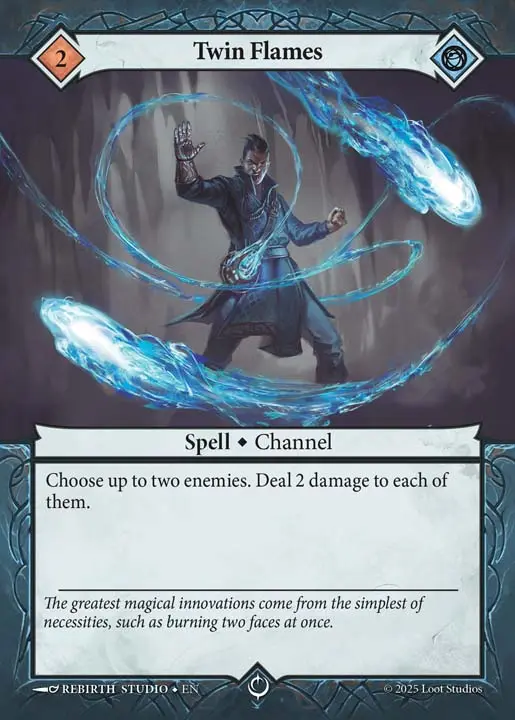
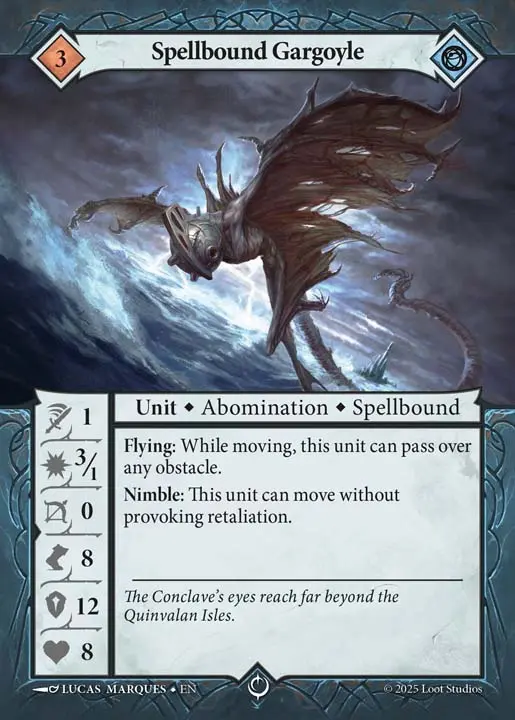
Twin flames and Spellbound Gargoyle form the reliable backbone that enables the early aggression and pressure Polinore needs to see success. Dealing three damage to two enemies, multiple turns in a row, from across the board can weaken even the strongest units.
Spellbound Gargoyle is that early game pressure that can contest relics and slow your opponent down while you setup Polinore’s engine.
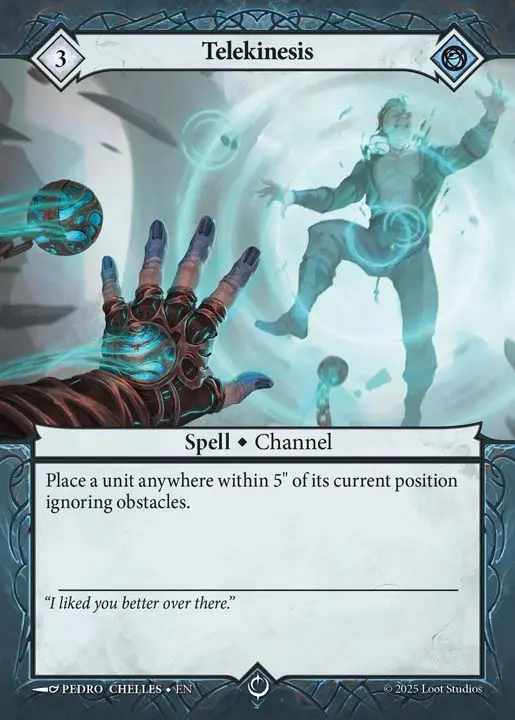
Telekinesis is the standout utility piece: it can pull a unit out of combat, off a Relic, or into damaging terrain. Because it's an Elite spell, it's a prime target to replay for extra value through the Legacy. Conclave Scholar ensures redundancy for Polinore’s Empower Spell ability while still being a threat itself.

Polinore wants to run the least amount of units to achieve his goal and make the most amount of room in his deck for spells. If you are looking for a great upgrade path, the Liastrum Research reinforcement pack is a great option. Here are 5 (+1) cards that can enhance Polinore's gameplan and cards we can take out to make room for them.
If you just bought Polinore and want to make some changes to make the deck a bit more effective here is an upgraded decklist that does just that without breaking the bank.
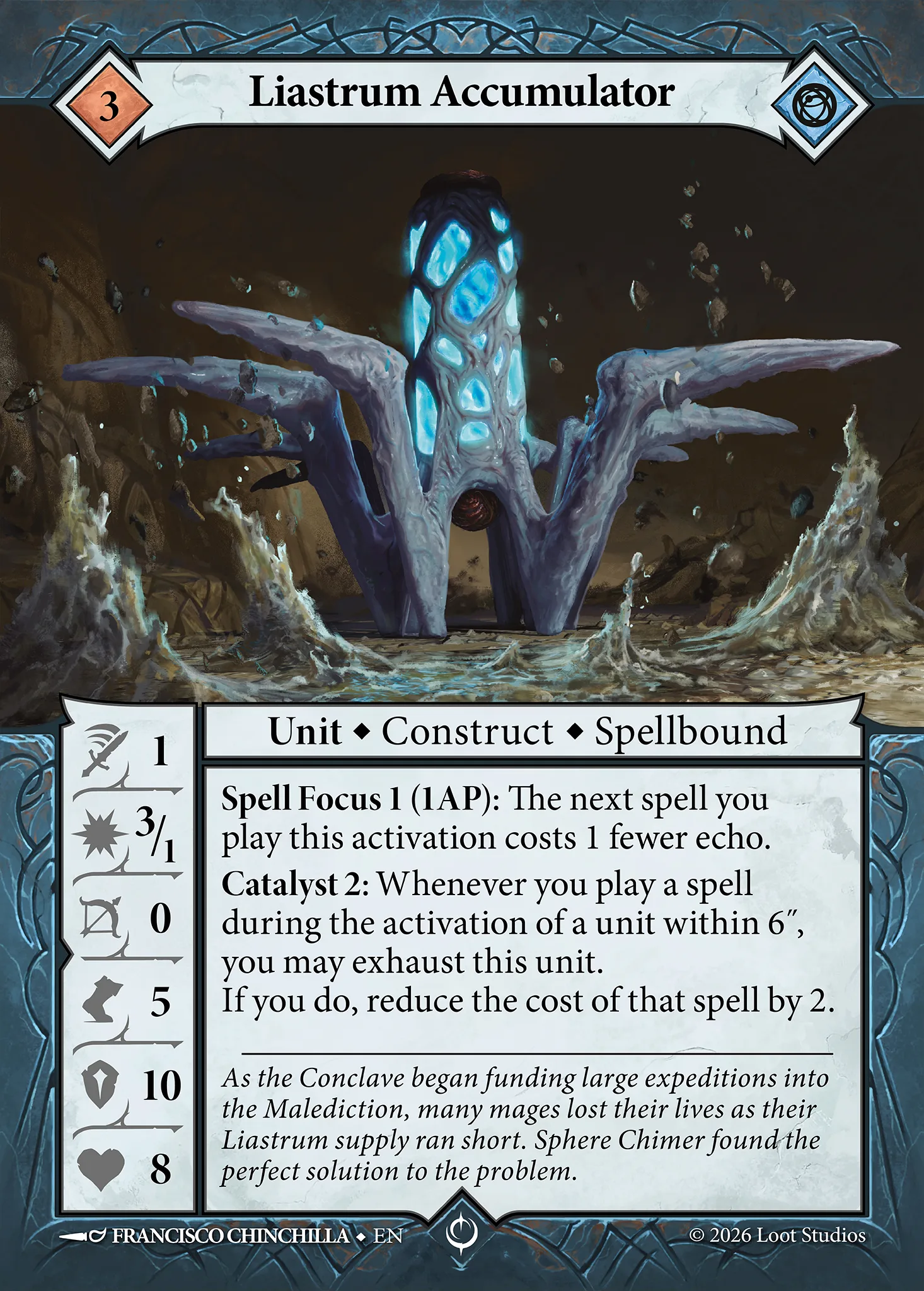
This basic unit supports Polinore's gameplan really well. Using Catalyst to knock two echo off any spell played, helps you play more spells while screening Polinore from a charge. Being able to both of these is incredibly powerful for Polinore.
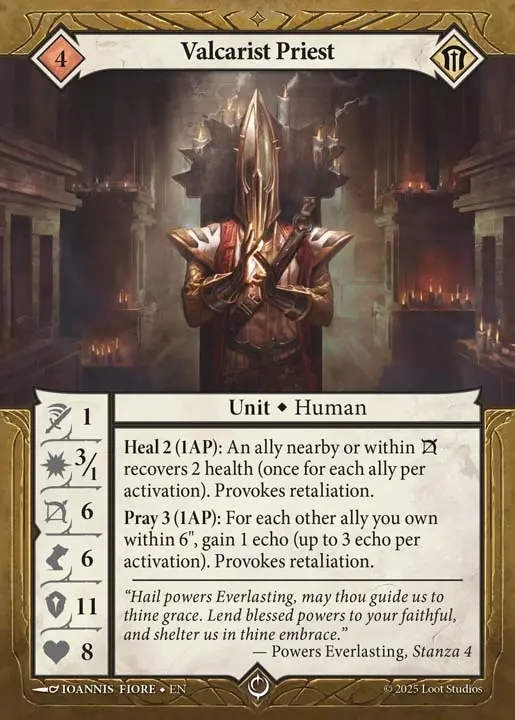
Valcarist Priests are a similar style unit that help you conserve echo so you can spend it on critical spells and units. While the Liastrum Accumulator may not be a perfect match power level wise for the Priest, they are able to enhance Polinore to allow him to cast more spells, deal more damage and kill key units faster.
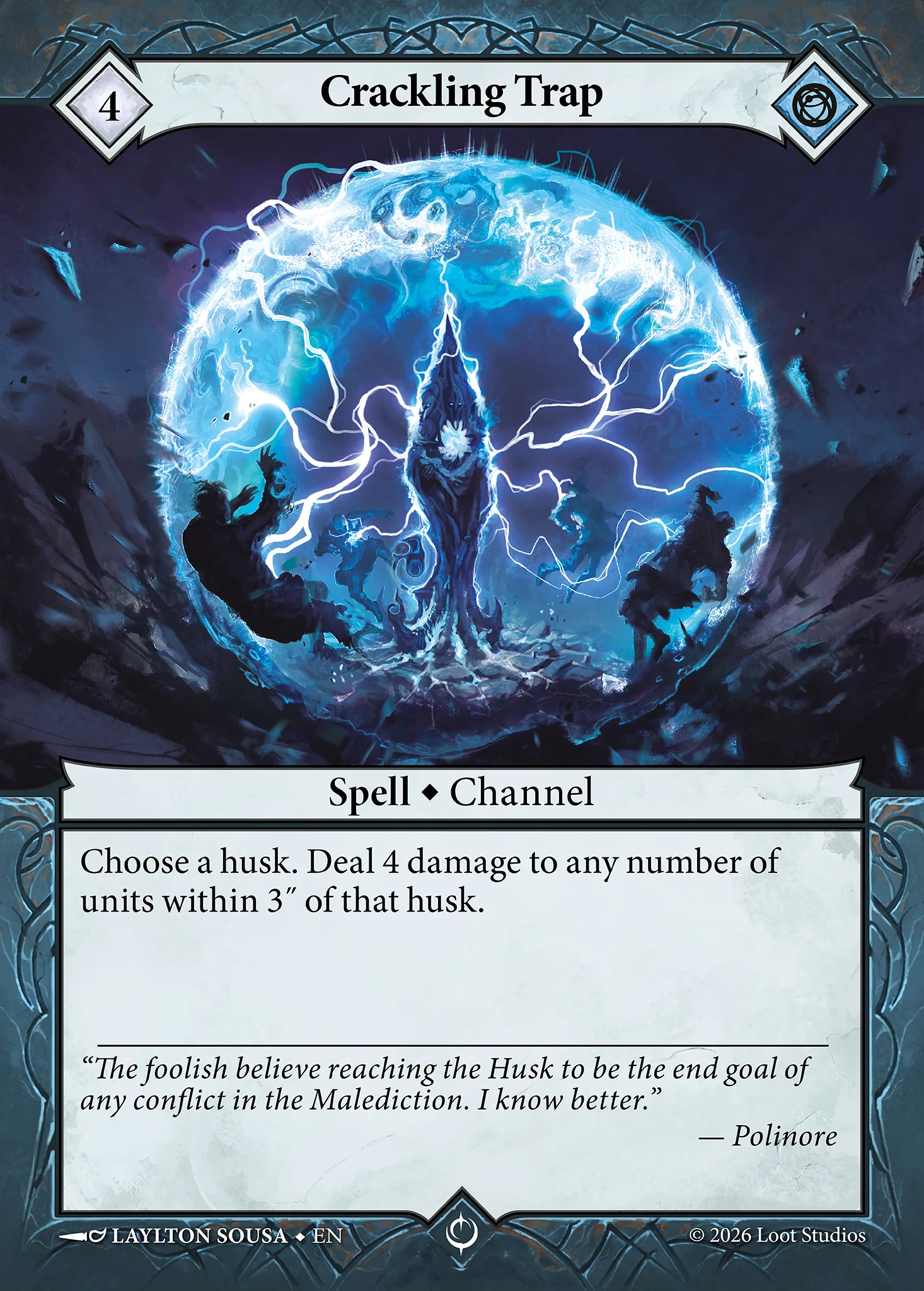
This elite channel allows you to choose a husk and deal four damage to any number of units. Note that it is any number, meaning you can pick only your opponents units and leave yours untouched.
Empower Spell turns that four damage into five per target, and because the effect can be pointed at opponent-only units, it's an AoE answer to exactly the swarm strategies the Pollinore struggles into.
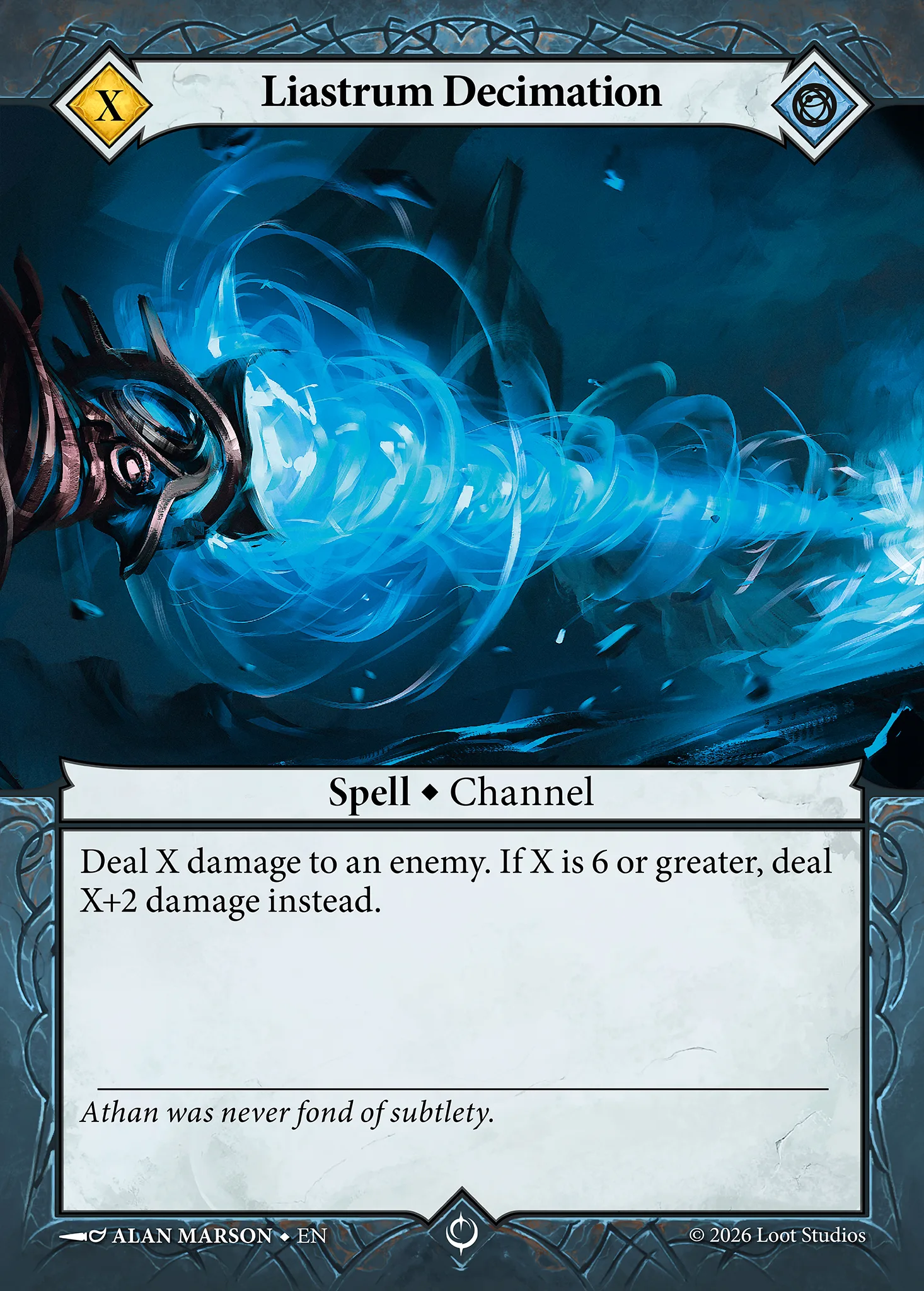
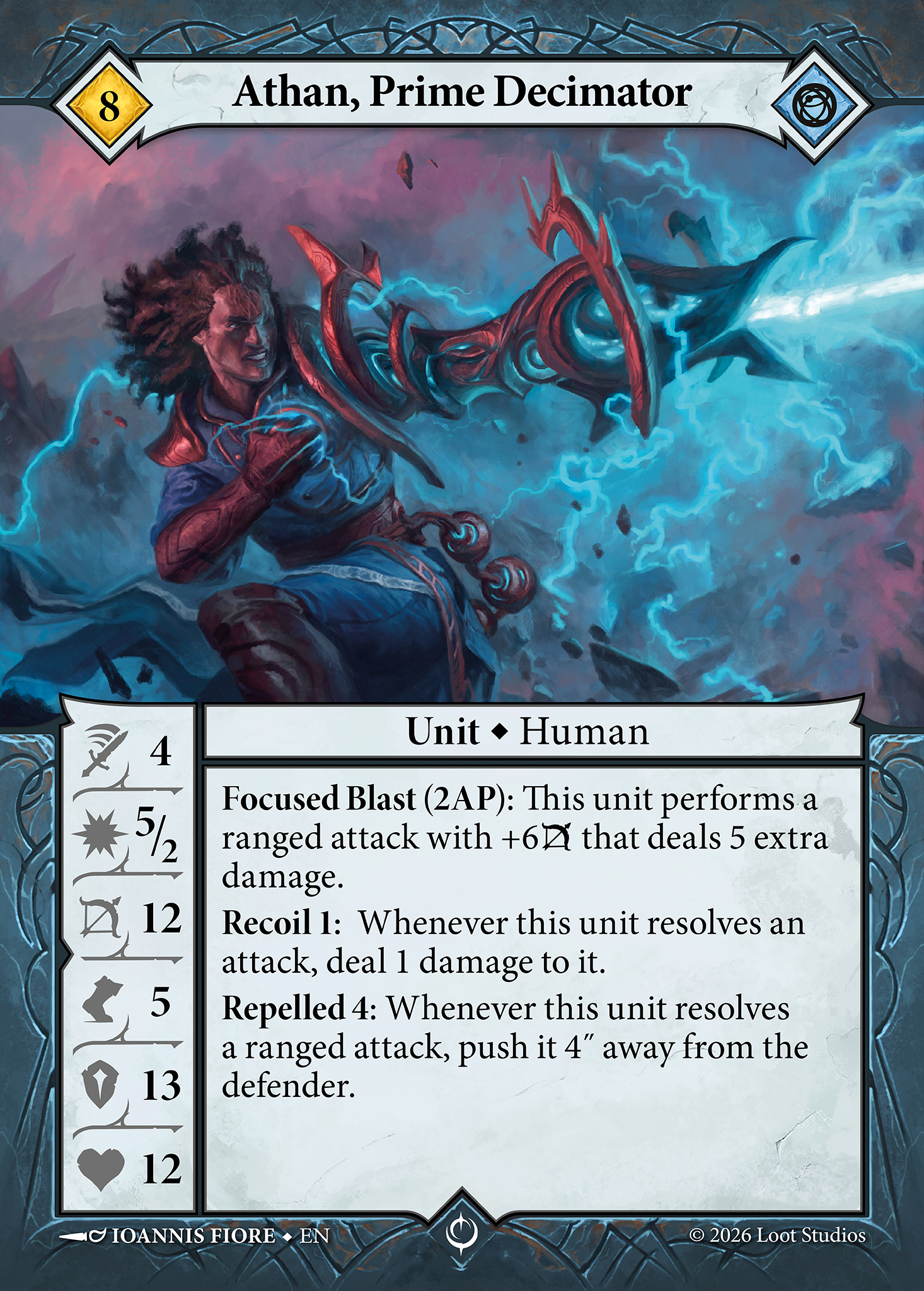
Both Liastrum Decimation and Athan, Prime Decimator are great top end cards that can ...decimate... opponent’s units.
Liastrum Decimation allows you to set the amount of damage dealt. It's echo-hungry in a deck that's usually strapped for it. Pair this with Liastrum Accumulator and Starcast Halls you can easliy spend 3 echo (plus the 3 discounted) for 8+ damage.
Athan gives you a 12 inch ranged cannon that if positioned right can reach 18 inches at 10 damage. Few units will be able to hide for long with 12+ inch range.
3x Shatter & 1x Spellbound Devourer
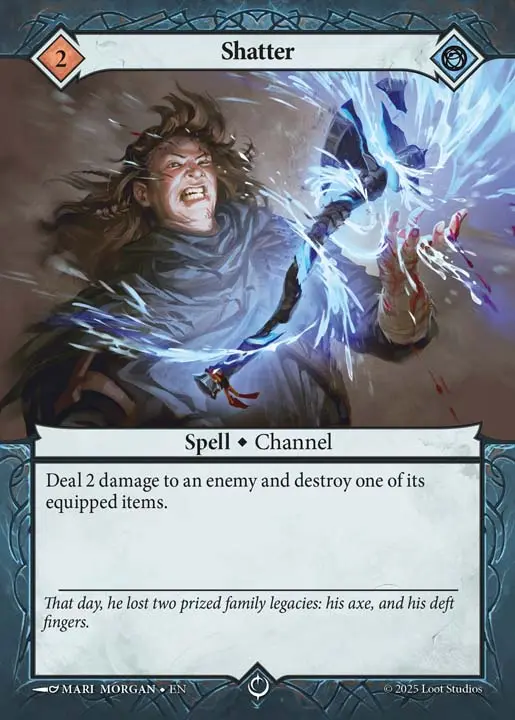
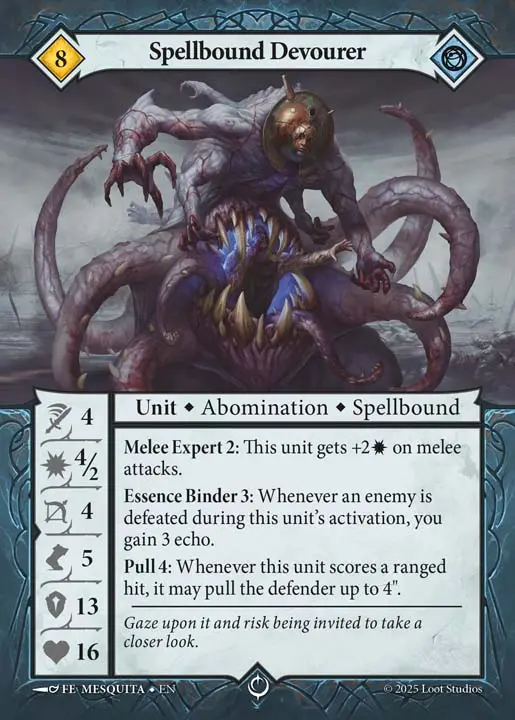
Shatter is a great sideboard card as it targets a specific strategy (item focused lists). Spellbound Devourer is a great top end threat, but his close range focus means that getting in close and pulling units towards you needs to be apart of your strategy. Still very much worth a look in some matchups, but competing with Athan’s 12+ inch range is tough.
2x Hunter's Bow & 2x Dimension Breach
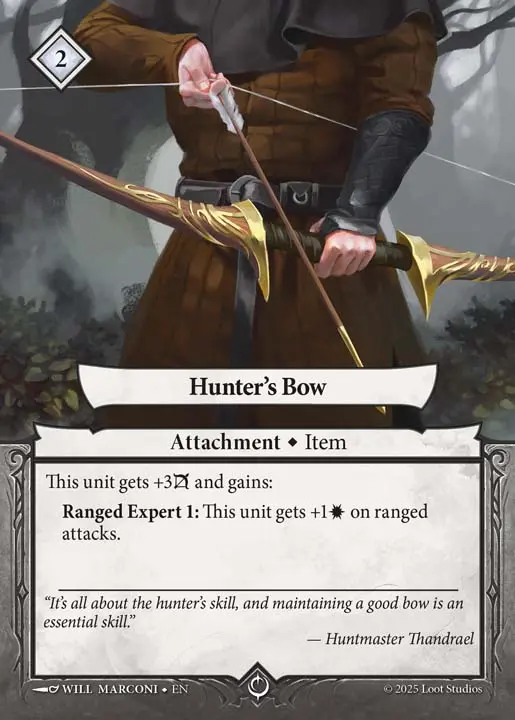
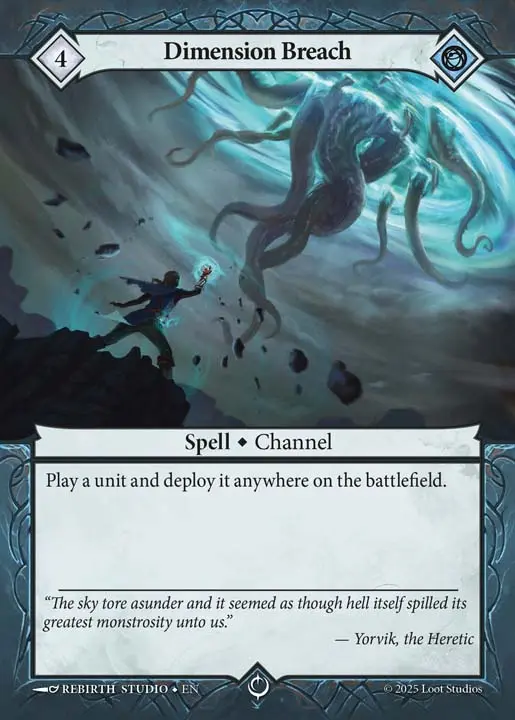
These cards have their place, however they don’t push Polinore’s spell engine forward. Extra range can be nice, but most units have 8+ inch range already. Dimension Breach is a cool card, but Polinore should not have problems deploying his units as you want to keep your opponent at arms length.
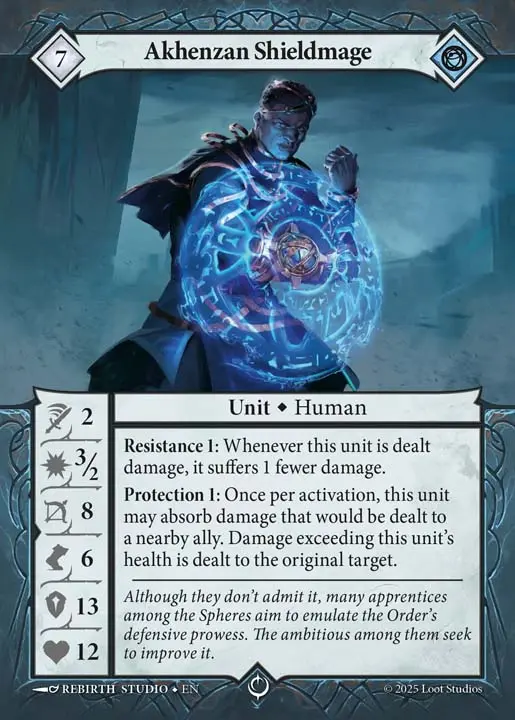
2x Neutralizing Ward & 2x Akhenzan Shieldmage & 1x Spellbound Bahig’udjin
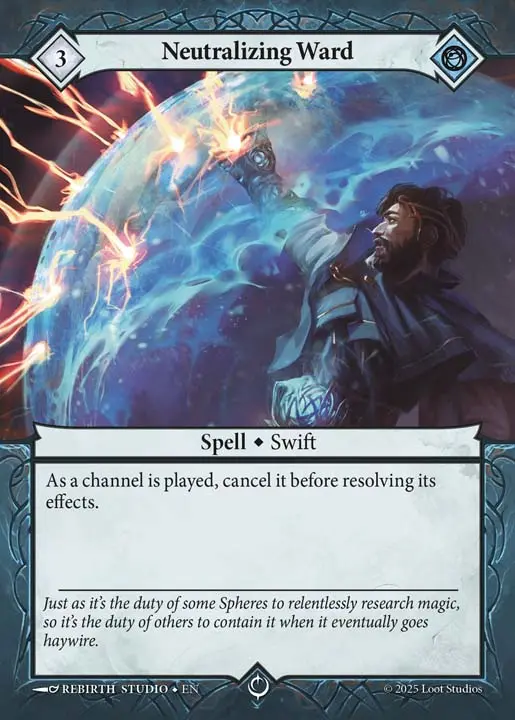
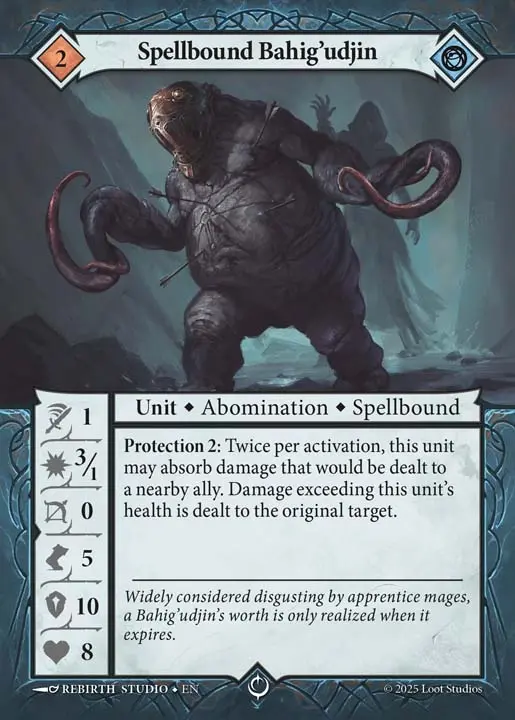
Neutralizing Ward can be a card that comes in clutch in the right moment, and in the right matchups you may want to keep both copies in the deck. However in order to make room for the new cards we need to make cuts and these fit great in the sideboard.
Akhenzan Shieldmage and Spellbound Bahig’udjin are decent units, but need to be cut to make room for more efficient threats and support units.
Here is an example of a decklist that pulls in cards from every possible release. You may end up tailoring it specific to your playstyle, but this is a good starting point that allows you to showcase Polinore's spell slinging abilities.
When building your Polinore deck play some test games. You may find you are more strapped for resources than you first thought and may want to reduce the number of unique cards in your deck.
The single highest-value piece of tech in this deck is the discard-pile interaction on Runefold Acquisition. Because the banish portion of the ability only triggers after a spell resolves, a countered spell played from the discard stays in the discard instead of disappearing, meaning a well-timed counterspell from your opponent barely slows you down.
Sequence around this: don't be afraid to bait a counter with a spell from your discard you don't need this round, to then follow up with a more powerful unique spell.
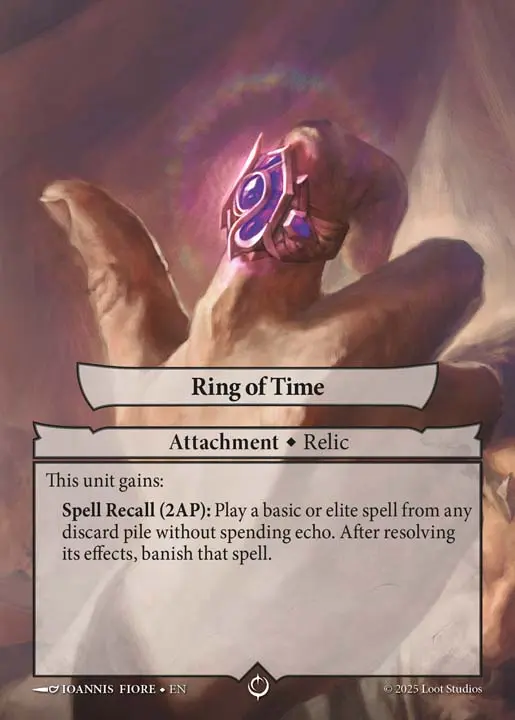
The Ring of Time on a lesser unit can do a lot of work for you. Being able to play a spell from any graveyard for no echo helps a resource strapped deck go even farther. It gives you more echo to spend on powerful spells in your hand.
At 12.8% of the meta and climbing back toward his six-month high of 15%, with a 56.8% tournamnet win rate, Polinore is doing exactly what a well-tuned puzzle deck should do: quietly outperforming decks with flashier statlines.
This is a deck for players who'd rather solve a game than muscle through it, who enjoy sequencing spells correctly, reading when to commit and squeezing extra value out of every card in the discard pile.
It isn't the most forgiving Seeker to pick up, and the swarm matchups will punish a slow start without mercy. But for a player willing to learn the puzzle, Polinore rewards that investment with some of the most consistent play patterns in the game.
These findings are hereby entered into the Grand Archive.