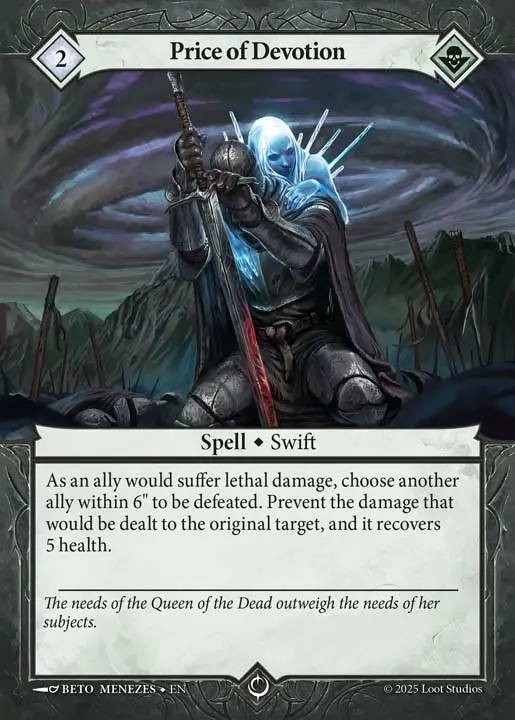
60% of Vorendal, the Dreadheart and 50% of Griza, Lingering Wound decks include Price of Devotion. High adoption usually signals a strong card, but adoption rate measures popularity, not performance. This is a breakdown of why Price of Devotion’s real-game impact doesn’t match its pick rate.
Price of Devotion is a swift that saves a unit from being defeated. A 2 cost swift that saves a unit is worth a look in any faction.
The important part, however, is understanding what Price of Devotion is actually asking you to have on the battlefield before it can be used to save that unit.
You need:
A valuable unit under a lethal threat.
Another friendly unit within 6 inches.
That second unit needs to be expendable.
The unit you're saving needs to be worth more than the unit you're sacrificing.
If any of those conditions aren't met, Price of Devotion becomes much less useful.
In a thirty-card deck where every slot is fiercely fought for, conditionally high-ceiling cards are less reliable than consistently moderate cards.
A card that demands this many prerequisites has to clear a high bar to earn its place.
This card forces you to wait and react to your opponent. If your critical unit is the first one attacked in a round? Do you still play this card to save the unit only to have it get attacked in another activation? You have to wait for the stars to align in order for this card to be effective and earn its spot in your limited card deck.
In Vorendal (13.7% of the meta), there are alternative ways to save your units without sacrificing tempo, which for an aggressive Seeker can be a death sentence.
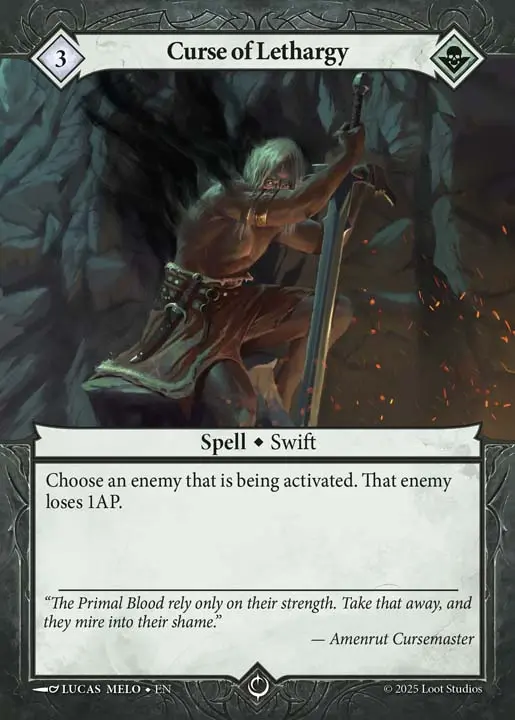
Curse of Lethargy, a Swift that causes an enemy unit to lose one Action Point. This can be used to prevent an attack or prevent a charge from happening.
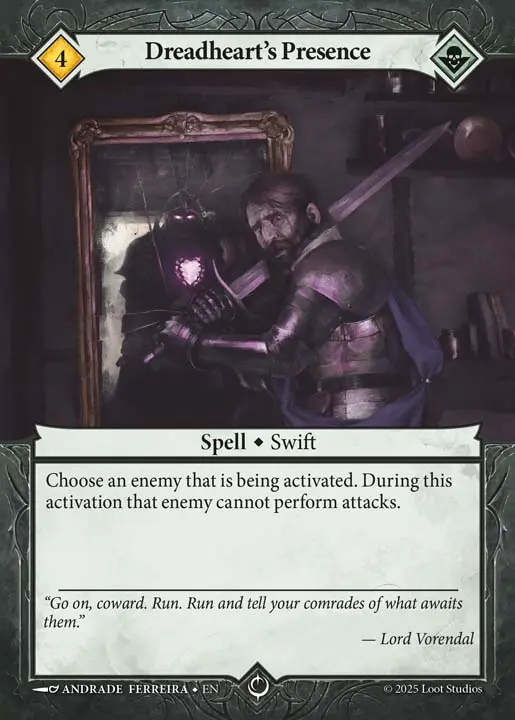
Dreadheart's Presence does a very similar thing but a bit more effectively.
In Griza (7.9% of the meta), there are far better options competing for the same slot.
Before putting Price of Devotion in your deck consider:
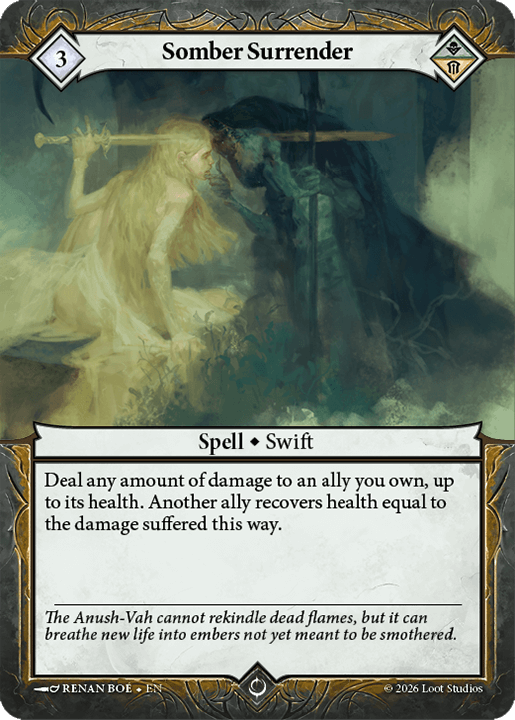
Somber Surrender, a Swift that allows you to heal a unit by damaging another. This has a great use case where you can play this before lethal damage resolves on a unit to then heal another unit.
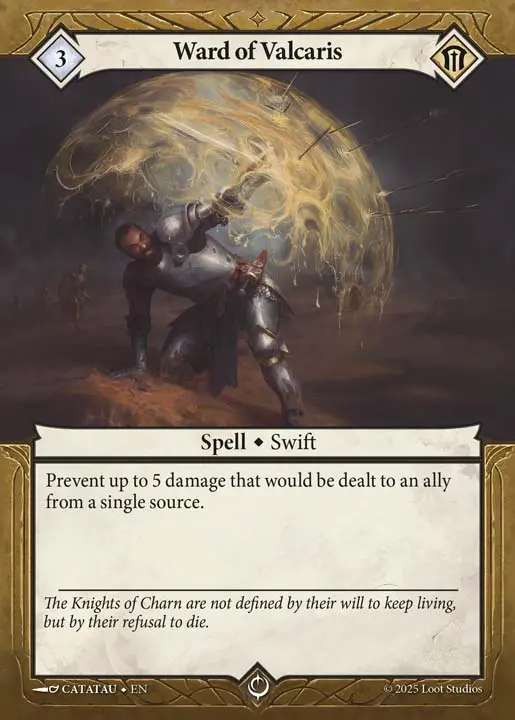
Ward of Valcaris, a Swift that prevents 5 damage to your unit.
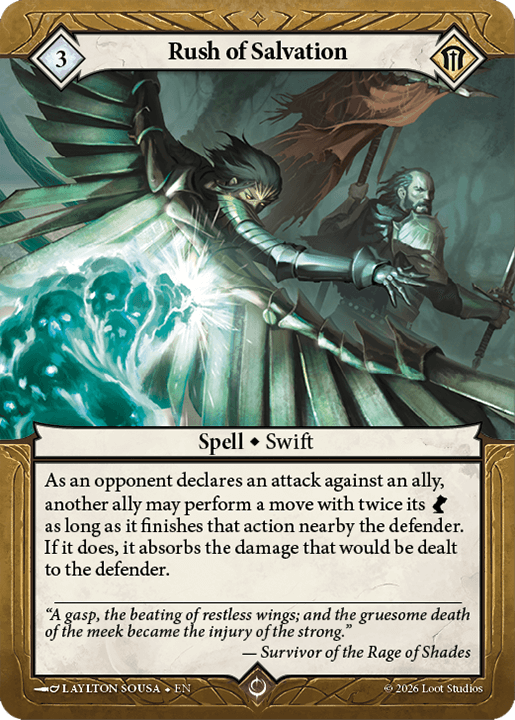
Rush of Salvation, a Swift that allows a unit to move to the unit under threat and absorb the damage in its place.
or even Echo of Sarstan into Healing Light all do more reliable work for less setup.
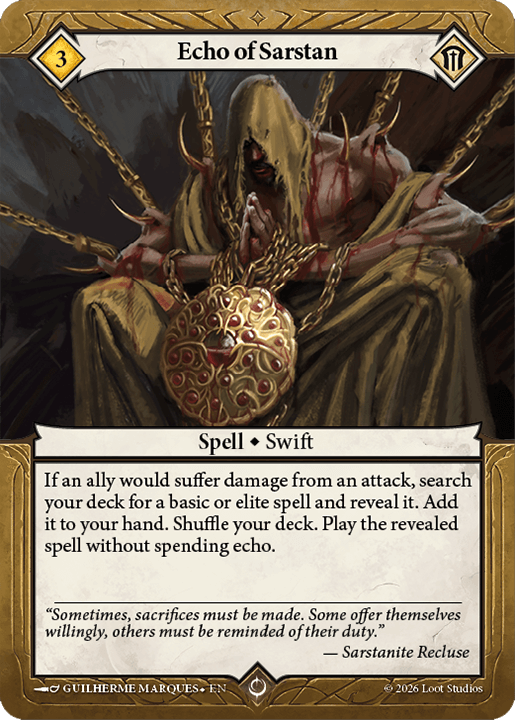
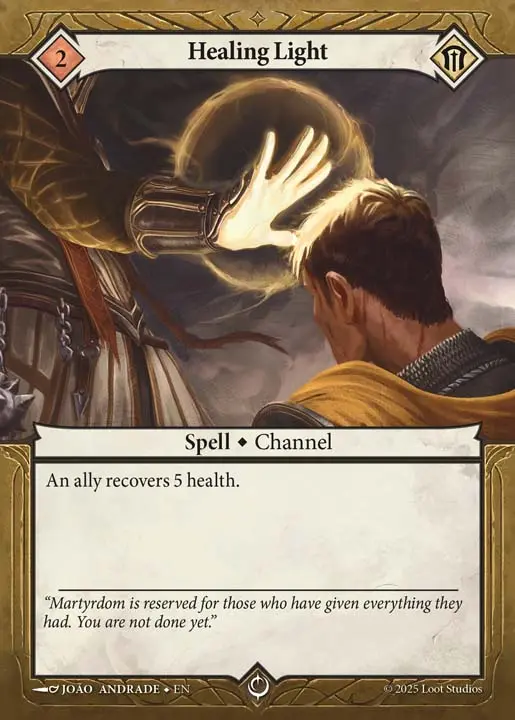
Almost all of the above options provide alternatives that save units from dying while requiring less setup.
Drawing a defensive card not only needs to be powerful when you use it, but it needs to be useful when you draw it.
The scenarios where this card just sits in hand and does nothing are too many to make it worth running reliably.
Price of Devotion can absolutely wins games. Saving Vorendal from a lethal attack can feel incredible. The problem is that memorable successes disguise how often the card spends an entire match doing nothing in your hand. Those highlight moments don't happen frequently enough to justify dedicating one to two slots of only thirty in your deck.
Countess Morrida Umberland can mitigate the downside of this card completely. Sadly it only shows up in 38.6% of Morrida decks.
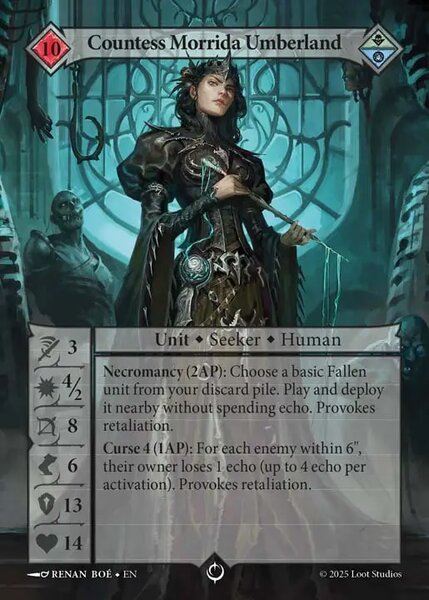
Morrida's necromancy ability allows you to mitigate the big downside of Price of Devotion by reanimating the sacrificed unit. Morrida can take advantage of units dying consistently without having to bend over backwards to get Price of Devotion to be a good card. Saving a Gateway Guardian, Barrow Defiler or Thriced Murdered can be game winning with no worry about losing tempo.
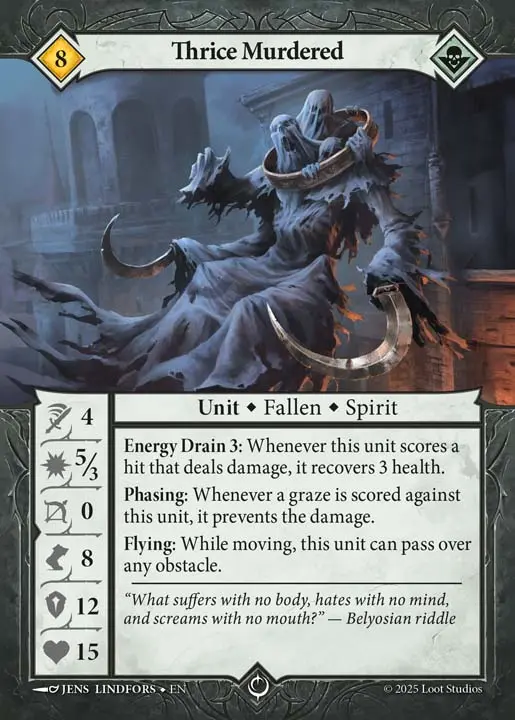
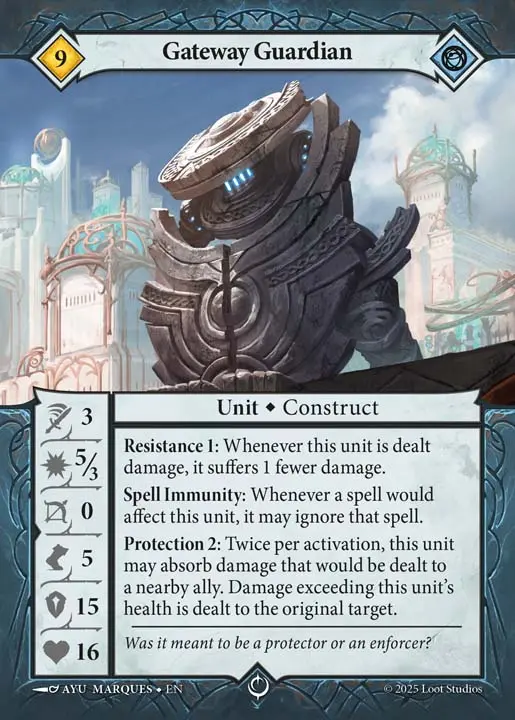
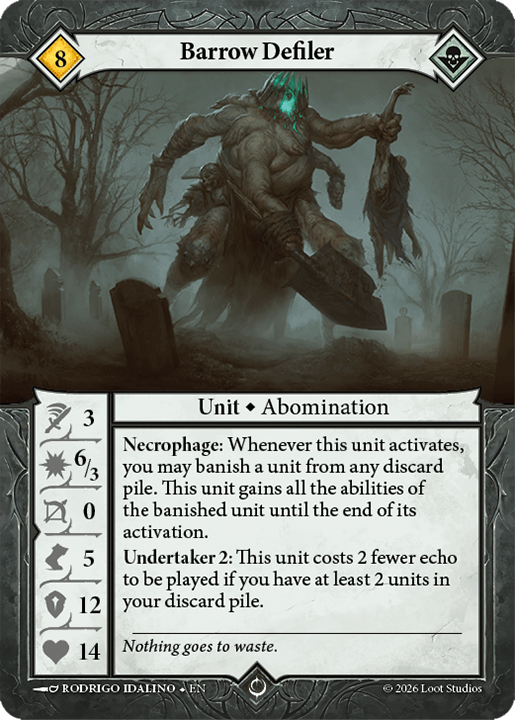
Trading a Stitched Corpse or Dead-at-Arms to save one of the above uniques is a great option when you can easily bring that unit back. Not every matchup calls for this card, but the ones where you need to ensure your critical units survive are where bringing in Price of Devotion from the sideboard makes sense.
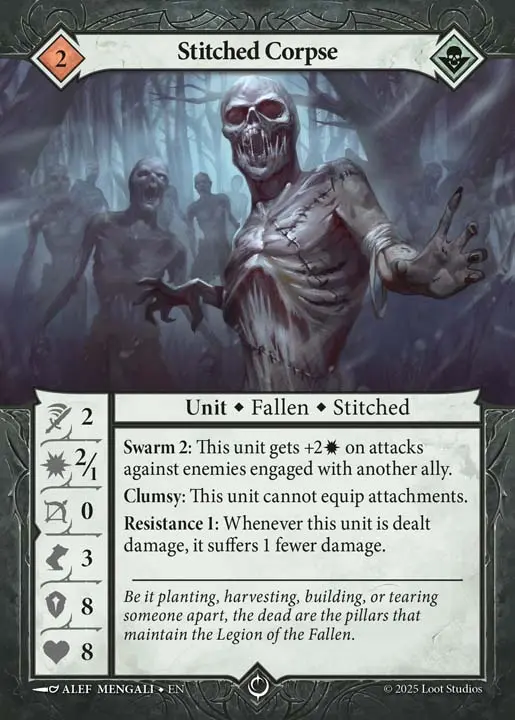
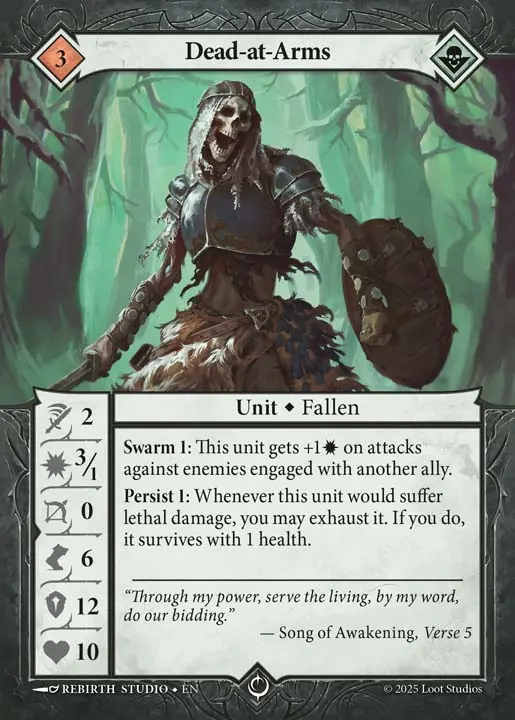
Pat from Seekers of the Malediction did a great deck review walking through Morrida and describing some use cases for Price of Devotion.
Building strong decks is often less about adding powerful cards and more about removing inconsistent ones. A deck that performs consistently will beat one that has cards that might perform well, but can’t be guaranteed to.
Price of Devotion creates unforgettable highlight plays, but tournament results are built on consistency, not best-case scenarios. Unless your strategy is specifically designed to exploit its sacrifice mechanic, that deck slot is better spent on a card you’ll be happy to draw every game.
The value of any relic cannot be judged by a single expedition. Repeated observation alone reveals its true worth.
These findings are hereby entered into the Grand Archive.