Malediction lets you build a deck with 30 to 50 cards. Many players use 35 or 40.
Here is the problem. The more cards in your deck, the harder it is to draw your best ones. Every extra card makes your best cards a little less likely to show up when you need them.
That is why 30 cards is the best choice. Every time.
Listen to this topic here
Pick your 30 best cards. Now add one more.
That new card is not as good as the other 30. If it were better, it would already be in the deck.
So every extra card is a not-so-good card. A 40-card deck is your 30 favorites plus 10 not-so-good cards mixed in.
Some players say, "But my extra cards are good!" Then swap one in and take a weaker one out.
Say you have 3 copies of a bronze unit. You really want to draw one.
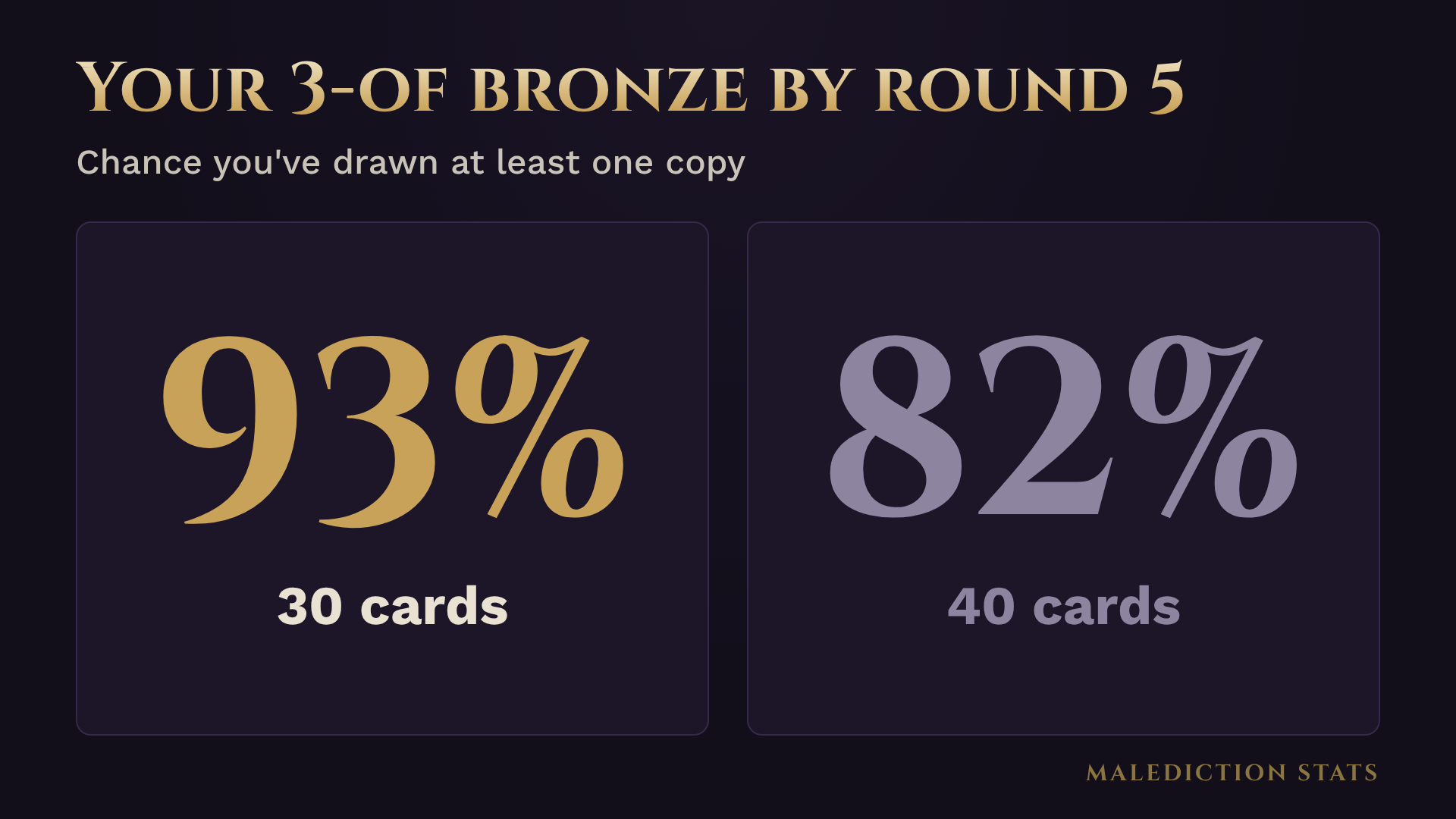
Play 100 games with 30 cards. By round 5, you find it in 93 of them.
Play 100 games with 40 cards. You find it in only 82.
That means the 40-card deck misses its card in 18 games. The 30-card deck misses in only 7.
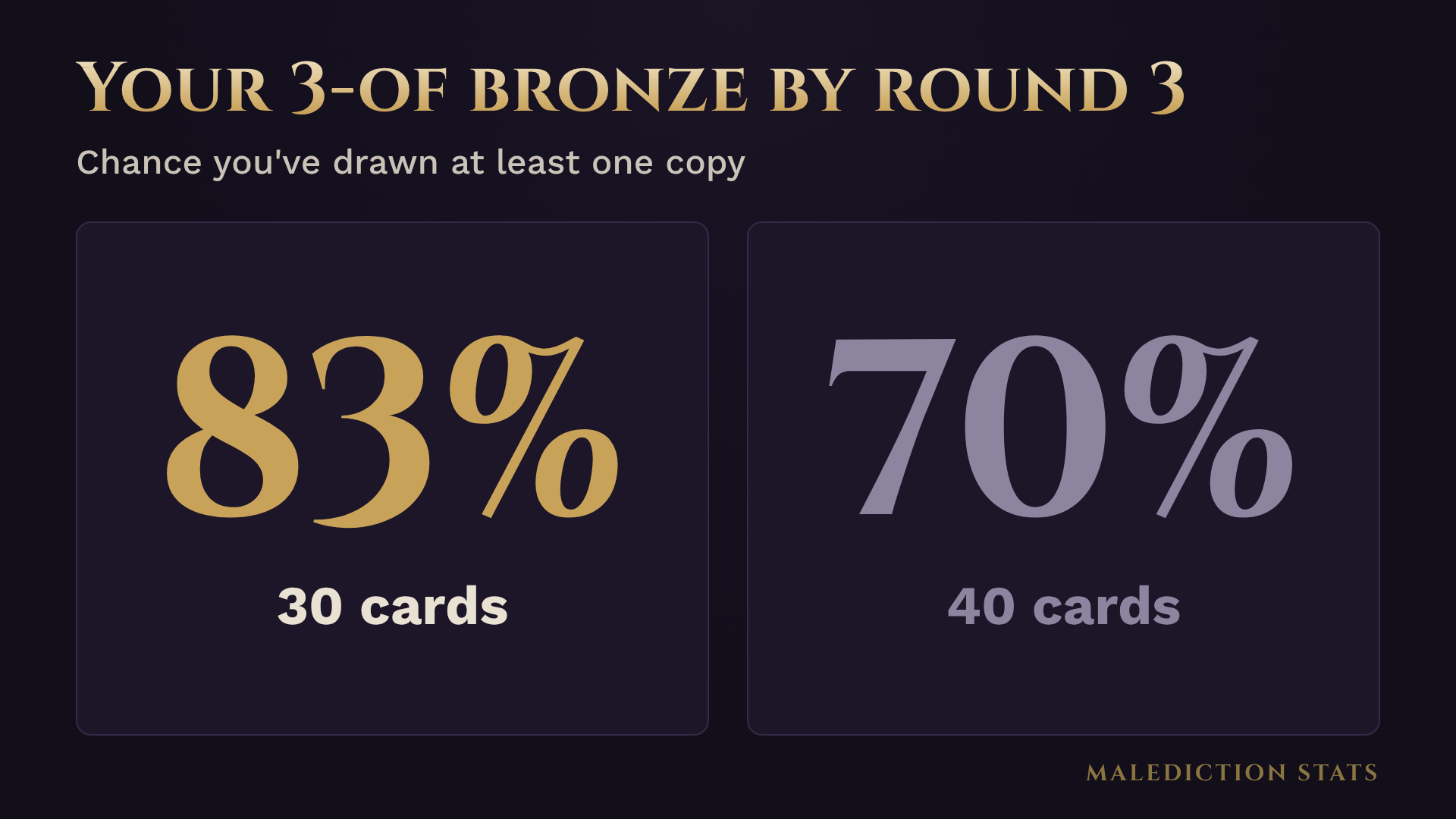
It is even worse early in the game. By round 3, the 30-card deck finds its card 83 times out of 100. The 40-card deck finds it only 70 times.
Even your first hand of 7 cards is worse. With 30 cards, your first hand has the card 56 times out of 100. With 40 cards, only 45 times.
Percentages are easy to ignore. Rounds are not.
By round 3, the 30-card deck has already found its card 83 times out of 100. The 40-card deck does not get that good until round 5. That is two whole rounds late.
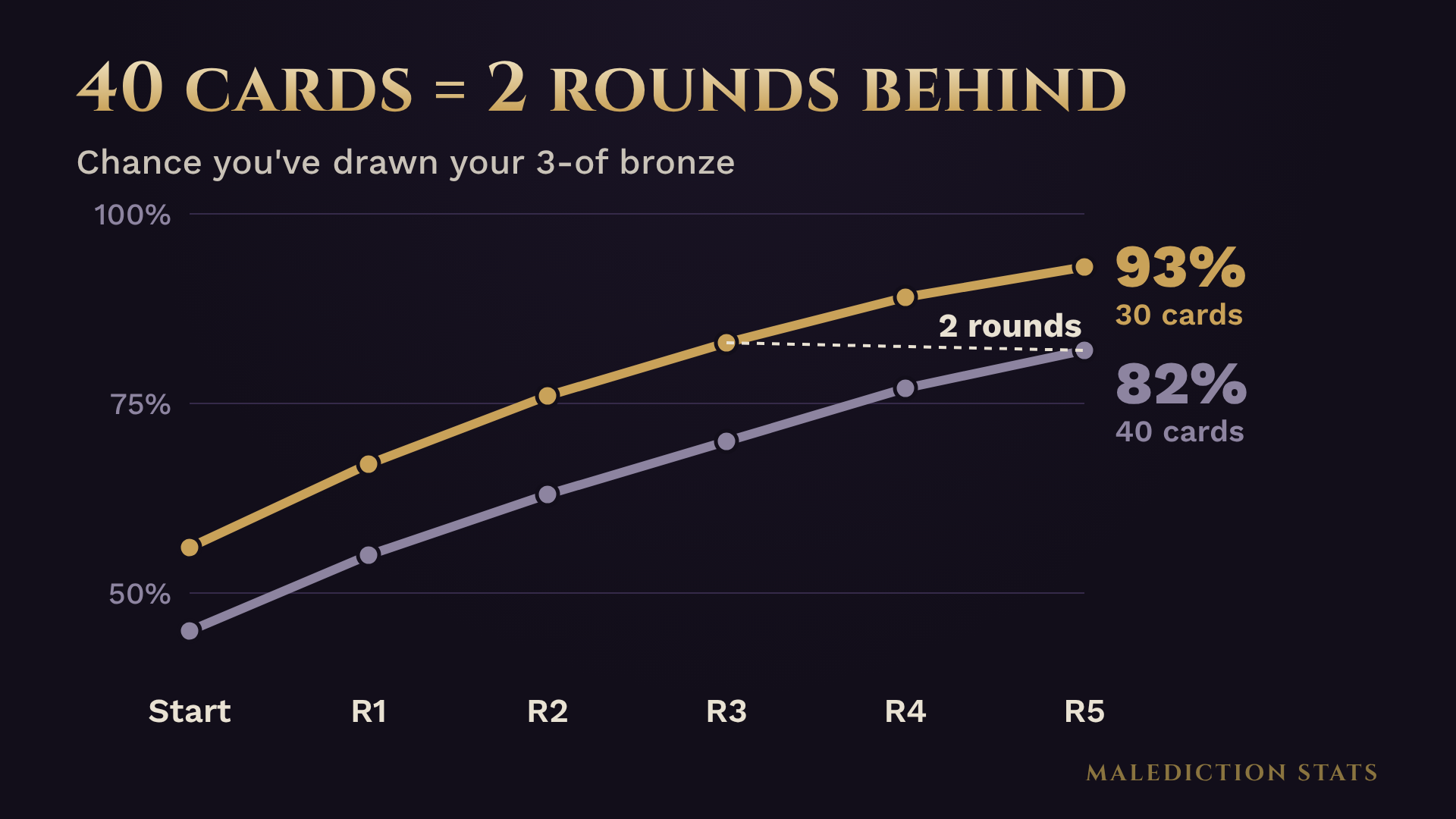
Most games end around round 5. If your best units show up two rounds late, your opponent has already grabbed the Husks and taken the lead.
What about 35 cards? Still late. A 35-card deck is about one round behind.
A gold card is a unique. You only get one copy. One card is the hardest to find.
With 30 cards, you find your gold by round 5 in 57 games out of 100. With 40 cards, only 43.
So with 40 cards, you are more likely to never see your gold than to see it.
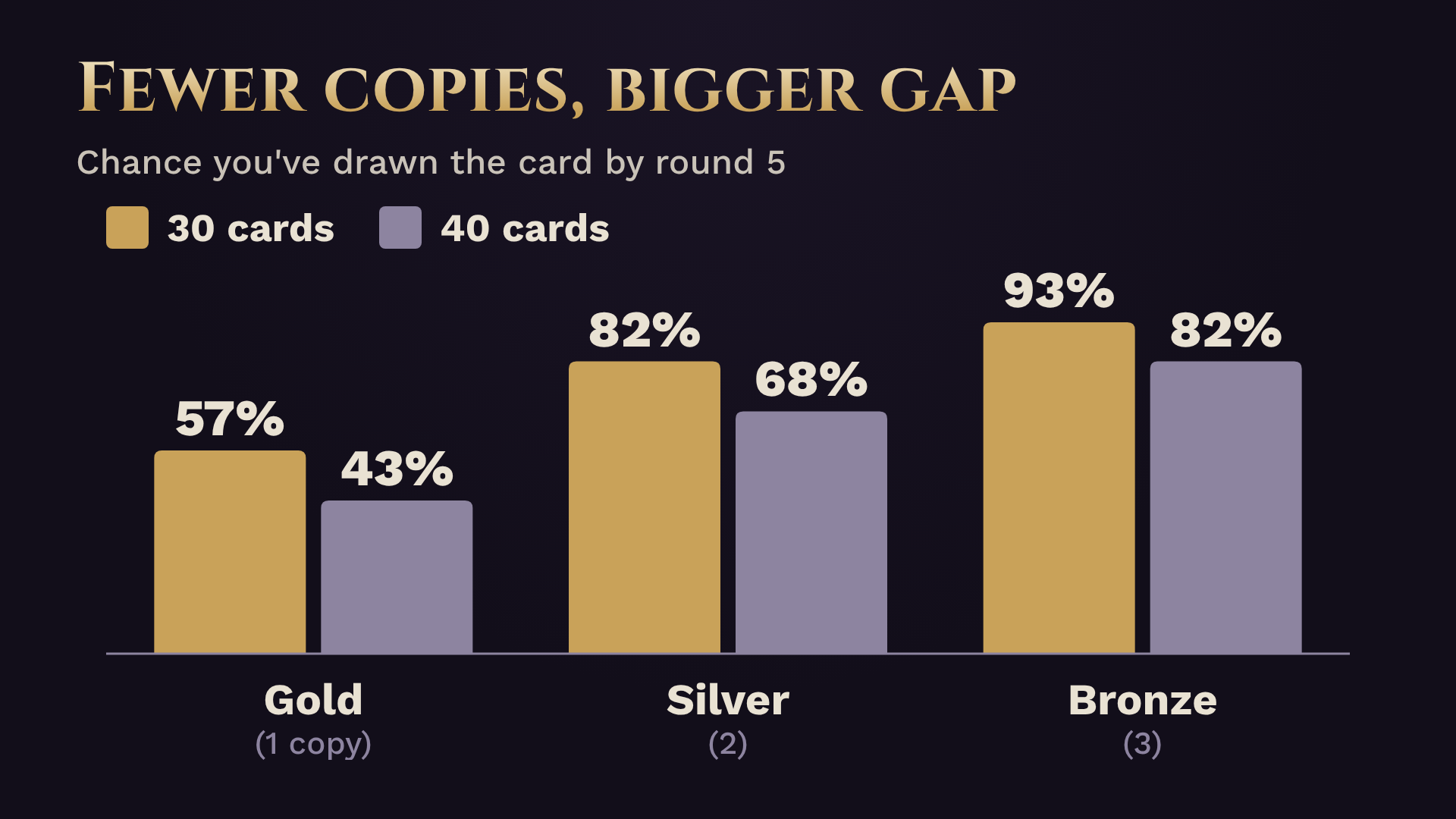
Silver cards get lost too. With 2 copies, the 30-card deck finds one 82 times out of 100. The 40-card deck finds one only 68 times.
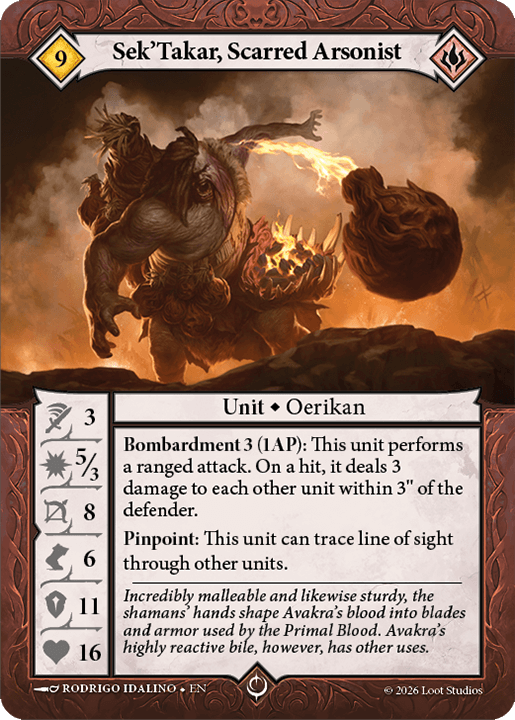
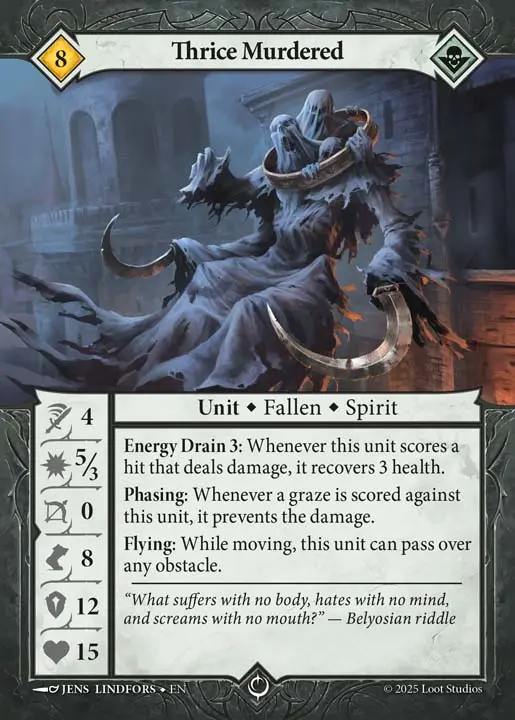
Your golds are your best cards. Sek'Takar, Scarred Arsonist can win a game against Sigrith Andravos. Thrice Murdered changes how your opponent plays every turn. You want to see them.
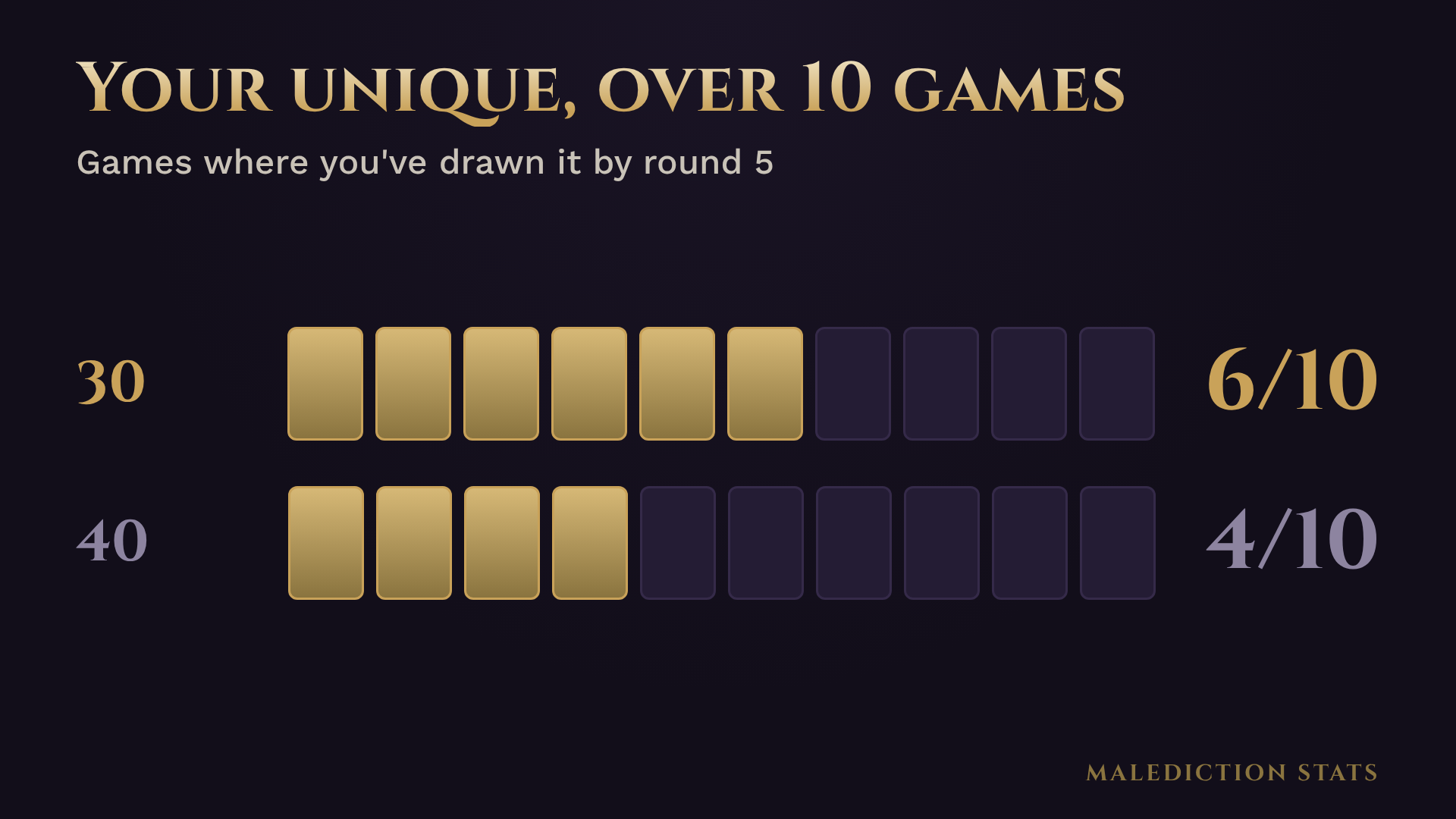
Play 10 games. A 30-card deck finds its gold in about 6. A 40-card deck finds it in about 4. That is 2 games where your best card never came.
It does feel fine, most of the time. If you only play one or two games, you might not notice the problem.
But play a tournament with 5 games. With 30 cards, there is about a 3 in 10 chance you miss your bronze in at least one game. With 40 cards, it is about 6 in 10.
So with 40 cards, you will probably have at least one game where your plan just does not show up. One bad game can knock you out of the tournament.
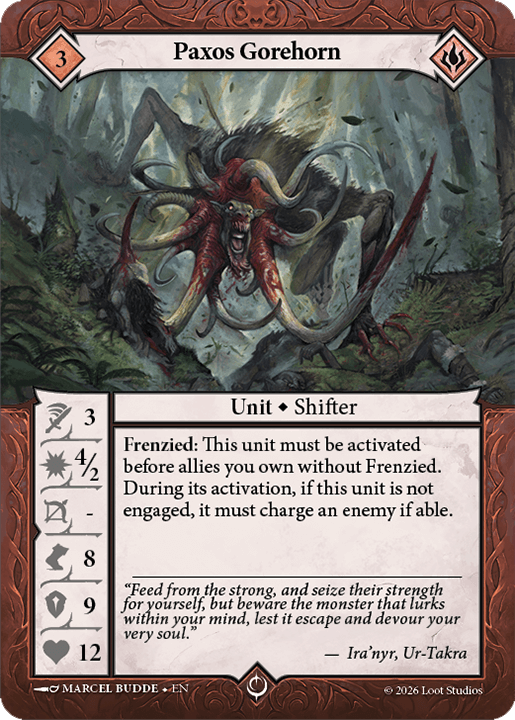
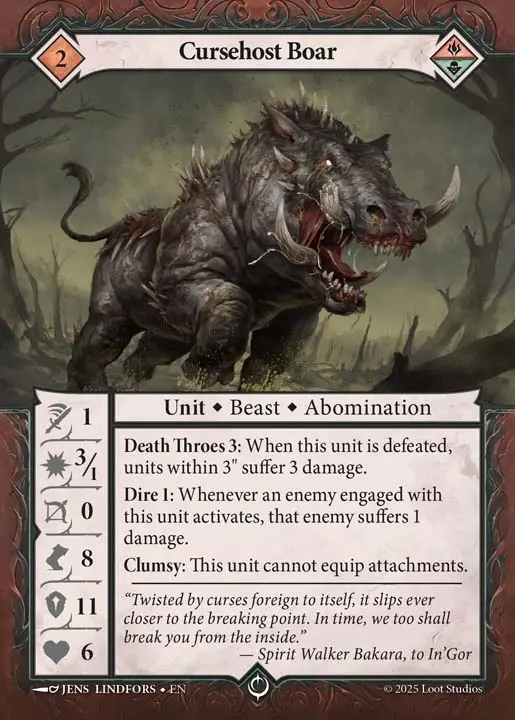
Play the same deck 15 or 20 times and you will see it. You keep drawing Paxos Gorehorns when you wanted Tarok Beasts and Cursehost Boars. That is not bad luck. That is the big deck.
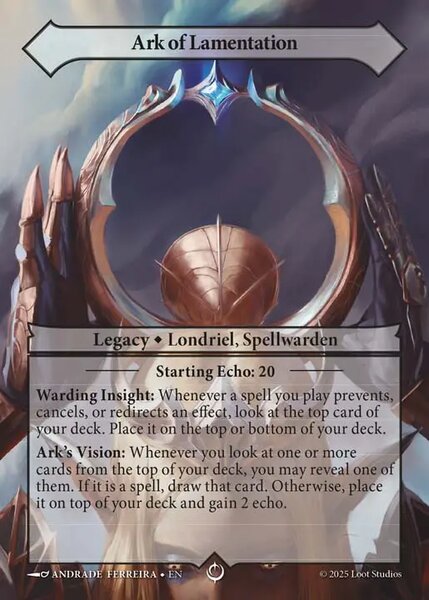
Some players say, "I will just draw more cards!" Cards like Auric's or Londriel's Legacy allow you to draw card when items enter the field.
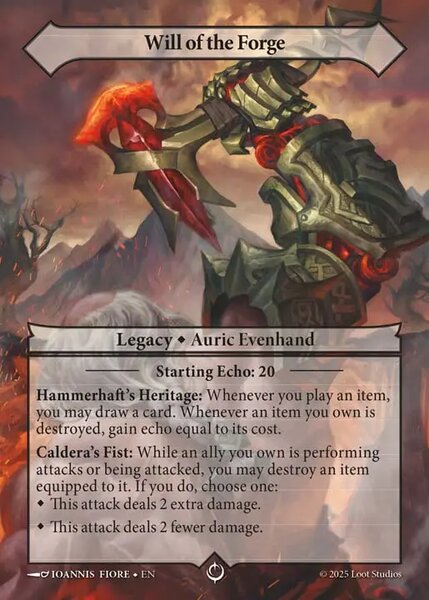
Here is the math. Give the 40-card deck one extra card every single round. Now it finds its bronze 92 times out of 100.
The 30-card deck, with no extra card draw at all? 93 times.
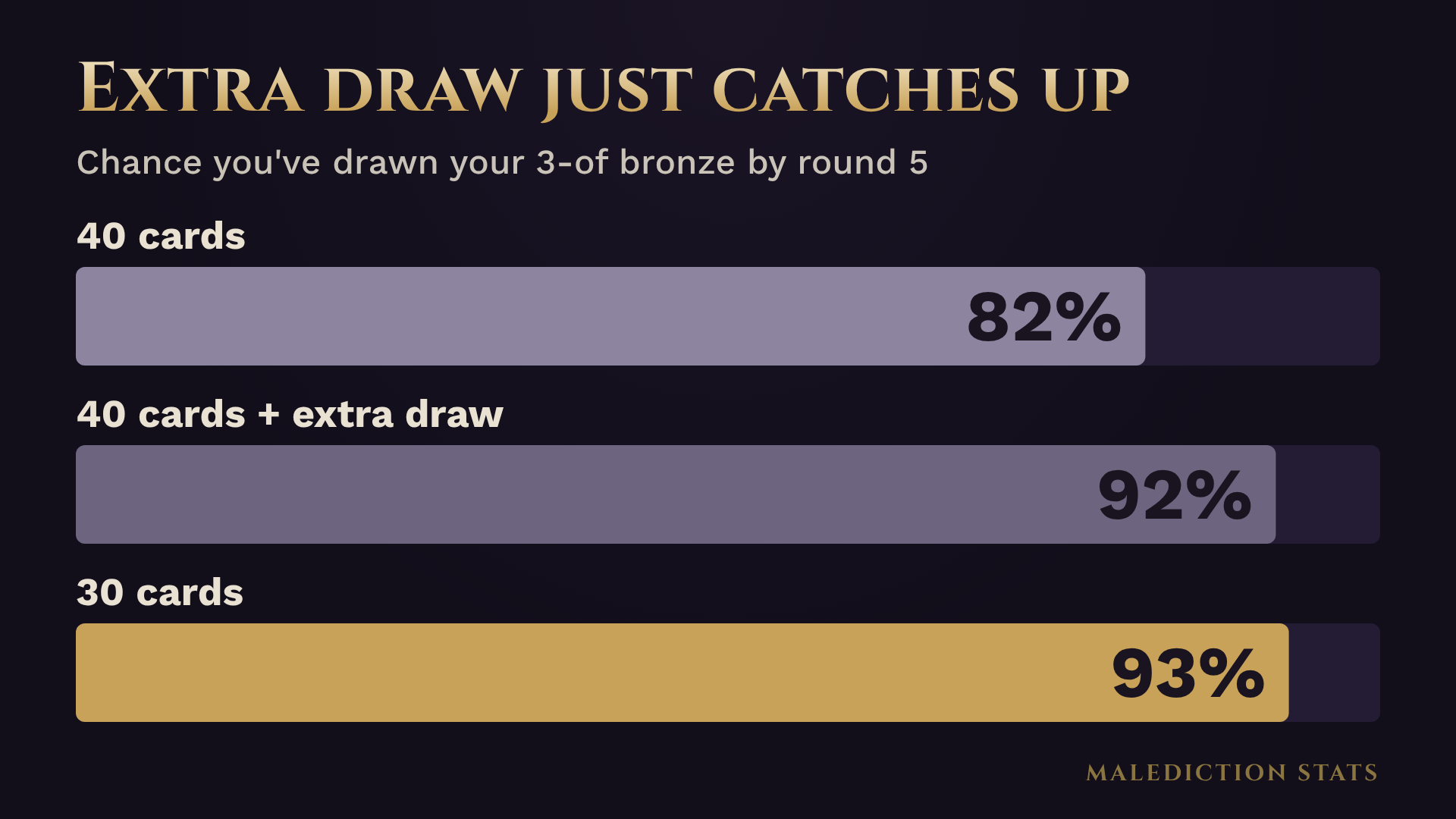
All that extra drawing, and the 40-card deck is still a tiny bit behind. It only caught up.
And drawing cards is not free. To draw extra cards you need to spend echo and play cards that specifically trigger it. Those spots could have been units that win the game.
You are using deck space to fix a problem that only exists because the deck is too big. Run 30 cards and the problem is gone.
Some cards let you peek at the top of your deck. Rewrite Destiny and Londriel's Legacy do this. If you don't like the card, you can put it on the bottom.
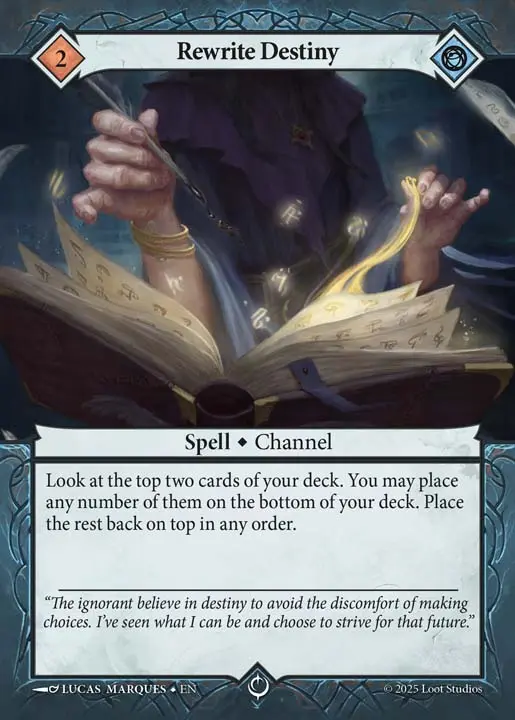
Peeking is good.
But peeking picks a better card, it does not give you more cards. A 40-card deck that peeks every round still only gets to 92 out of 100. That is still not better than a 30-card deck that never peeked.
Peeking works better with 30 cards anyway. When you put a bad card on the bottom of a 30-card deck, it is gone for the whole game if you don't shuffle your deck.
Polinore wants lots of cards. Londriel wants the right card. Both work better with 30.
Some players say more cards means more choices. But you can't play every card you draw.
You only get so much echo. By round 5, a Seeker that starts with 20 echo has gotten 48 total. Your Seeker alone costs 10 of that.
By round 5, you have drawn about 17 cards. You can't pay for all of them.
So you don't need more choices. You need your few plays each round to be good ones. A 30-card deck gives you more good cards to pick from.
Some players add cards because they are scared of decking. If you have to draw and your deck is empty, you lose. A bigger deck feels safer.
But look at when it would actually happen. With the normal 2 cards per round, a 30-card deck does not run out until round 12. Most games are over by round 5.
Even with extra draw, you have lots of time. Draw 3 cards every round and you still last until round 8. Draw 4 every round, double the normal amount, and you last until round 6.
So if you are decking yourself, one of two things went wrong.
The first is that the game went on way too long. Your deck was not closing out the game. Adding more cards does not fix that. It makes it worse, because your game-winning cards are now harder to find.
The second is that your deck is drawing too much. Every card that only draws cards is a card that does not win the game. If you are seeing your whole deck, swap some draw for units or spells that score Mastery.
The goal is to reach 40 Mastery, not to see every card in your deck. A deck that wins by round 5 never has to worry about round 12.
Some players agree 40 is too many. But they say 32 or 34 is close enough, especially for a Seeker like Auric Evenhand that draws a lot.
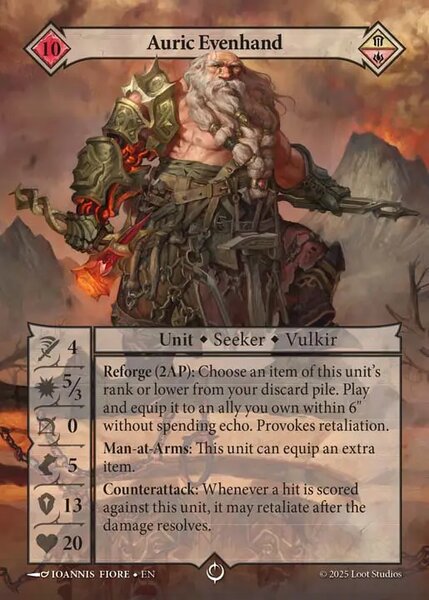
Make it fair, let both decks draw the same number of cards. After 17 cards, you find your gold 57 times out of 100 with 30 cards, 53 with 32, and 50 with 34. The smaller deck wins every time.
To be fair, 30 and 32 are pretty close. And drawing lots of cards does make the gap smaller. But smaller is not zero. The bigger deck never wins.
Some players add cards so they have an answer for every opponent.
You don't need to, you have a side deck. It holds up to 7 cards and after you see who you are playing, you can swap cards in.
So if a card is only good against one Seeker, keep it in your side deck. Bring it in when you need it. Keep your main deck at 30.
Picking only 30 cards is hard. You have to choose, but that is what makes your deck great. When every card is a good card, every draw is a good draw.
Every card past 30 makes your best card harder to find. Drawing more cards does not fix that. It only helps you catch up.
These findings are hereby entered into the Grand Archive.